ServicesPool Drain and Refill
Pool Drain and Refill in Florence, AZ
When the water stops responding to chemicals, the problem is usually what has built up in it. We test your water first, tell you plainly whether a full drain makes sense, then pump, clean, refill and balance it so the pool starts fresh.
Why old pool water eventually has to go
Every week, the sun evaporates water from your pool, but the minerals stay behind. Hard fill water adds more calcium each time the autofill tops it off. Chlorine tablets add cyanuric acid, the stabilizer, which never evaporates or breaks down. Over a few seasons, total dissolved solids, calcium hardness and stabilizer climb until chlorine stops working well and scale forms on tile and inside the heater.
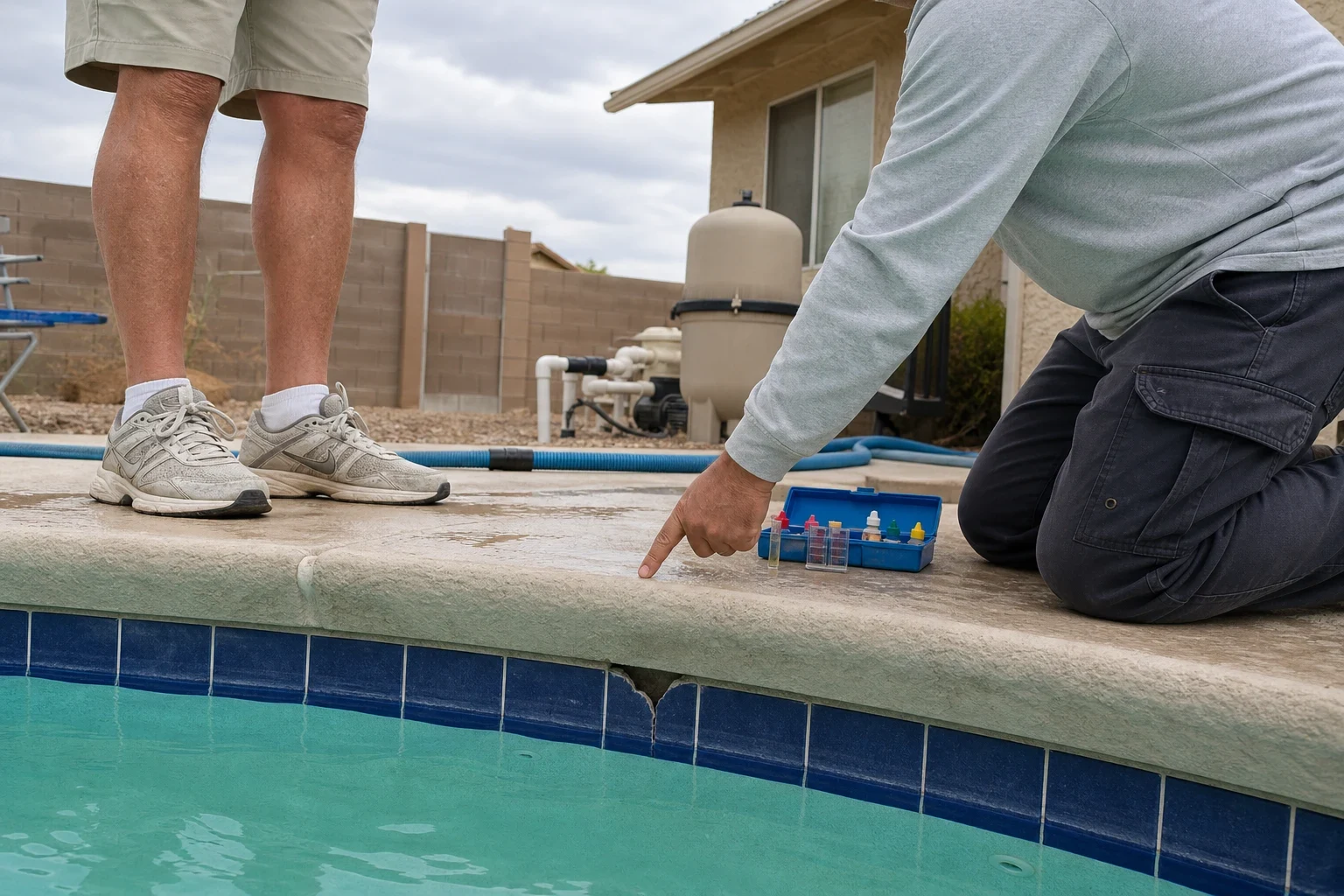
No chemical removes those buildups. Diluting with fresh water is the only fix. That is why we start with a full water test, not a pump. If your numbers show a partial drain will bring things back into range, we tell you that. If the water is past saving, we explain which readings are out and why a full drain and refill is the right call.
What a drain and refill includes
- Water testing before we start
- We measure total dissolved solids, calcium hardness, cyanuric acid, pH and alkalinity. You get the readings and our recommendation before any water moves.
- Controlled pumping and discharge
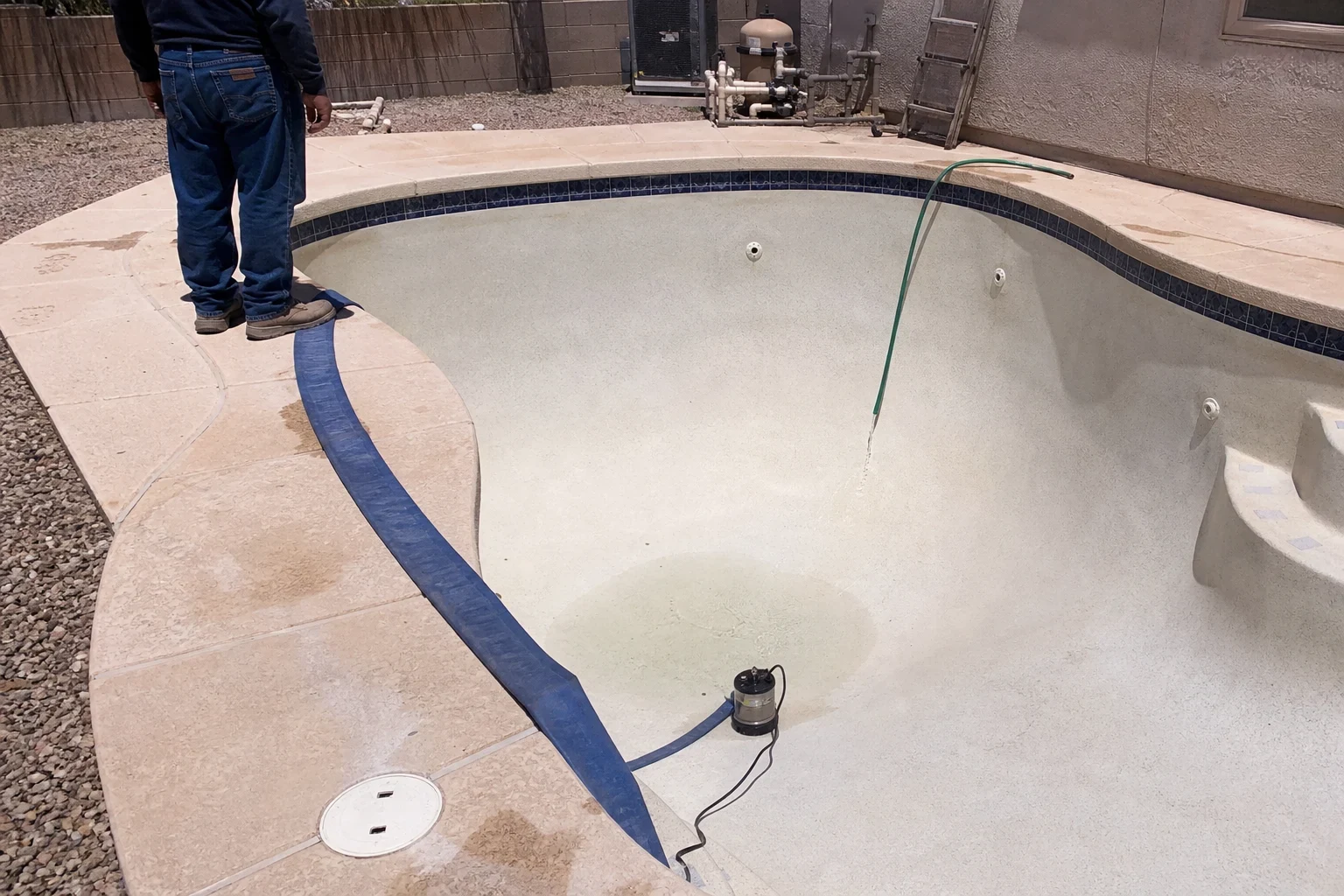
- We drain with a submersible pump and route the water where local rules allow, typically your home's sewer cleanout. We watch the shell as the level drops.
- Hydrostatic relief valve check
- With the pool empty, we open the hydrostatic relief valve in the main drain sump so groundwater pressure can't push against the shell. We confirm it reseats properly before the refill.
- Surface inspection while it's empty
- An empty pool shows what water hides: plaster delamination, cracks, loose tile and worn drain covers. We photograph what we find and explain it. Any repairs are completed in-house, never handed to a subcontractor.
- Refill and startup chemistry
- We monitor the refill, then balance pH, alkalinity and calcium, add stabilizer in a measured dose and bring the chlorine up so the fresh water starts clean.
Signs your pool water needs replacing
Chlorine won't hold
You add chlorine and it reads low again a day later, or algae keeps returning. High stabilizer, often above 100 ppm, locks up free chlorine and slows sanitizing.
White crust that keeps coming back
Scale forms at the waterline and on spillways faster than it can be scrubbed off. That points to calcium hardness that the water can no longer hold in solution.
Cloudy water with good readings
When pH and chlorine look right but the water stays dull, high dissolved solids are often the cause.
Several years since the last fill
Most desert pools carry enough mineral and stabilizer load after a few years that dilution becomes the only practical correction.
Planned acid wash or replaster
Surface work requires an empty pool, so pairing it with fresh water makes sense.
What affects the price
We price each drain and refill after testing your water and seeing the pool, and the quote lists each part of the job separately. The main variables are the volume of water, how much work the empty shell needs and the chemistry needed to start the fresh water. The water used for the refill comes through your home's meter and appears on your utility bill.
Pool size and depth
More gallons means longer pumping time, a longer refill and more startup chemicals.
Added surface work
Adding an acid wash or calcium removal and tile cleaning adds labor, but it's more efficient than draining a second time later.
What the inspection finds
Cracks, a stuck hydrostatic valve or failing plaster may need repair before refilling. We show you photos and price it before doing any work.
Fill water and startup chemistry
Hard tap water can need sequestrant and careful calcium and pH adjustment to keep the new fill from scaling.
How the job day runs
- 1
Test and confirm
We retest the water, check the equipment and turn off the pump and heater at the breaker so nothing runs dry during the drain.
- 2
Drain and inspect
The pump runs until the pool is empty, usually most of a day depending on volume. We open the hydrostatic valve, clear debris from the floor and inspect the plaster, tile and fittings.
- 3
Clean the shell
We rinse the surface and clear the main drain sump. If you've added an acid wash or calcium removal, that work happens now while the shell is dry.
- 4
Refill and balance
We start the fill right away so exposed plaster doesn't bake in the sun. Once full, we restart the equipment, bleed air from the pump and filter, and dose the startup chemistry.
Drain and refill questions
Can't you just add chemicals to fix my water?
Not for dissolved solids, calcium hardness or stabilizer. No chemical reliably pulls these out of pool water. Dilution is the fix. If your readings are only slightly high, a partial drain may be enough, and we'll tell you that after testing.
When is the best time of year to drain a pool here?
Cooler months are safest. Summer heat can dry and crack exposed plaster within hours, so we avoid draining during the hottest stretches. Whatever the season, we keep the shell empty only as long as the cleaning and inspection require.
Can draining damage my pool?
A pool left empty too long, or drained while groundwater pressure is high, can crack or shift. That's why we open the hydrostatic relief valve, keep the empty period short and refill promptly. Our work is done under our ROC license.
What if you find damage once it's empty?
We photograph it, explain the cause and give you a separate price. Our own crew handles repairs in-house. You decide whether to repair now or refill and plan it for later.
How soon can we swim after the refill?
Usually once the chlorine and pH are balanced, often within a day or two of the refill. We'll give you the readings and let you know when the water is ready.
Find out what your water test says
We'll test your water, show you the numbers and tell you honestly whether you need a full drain, a partial drain or neither.