ServicesEquipment Installation
Pool Equipment Installation in Florence
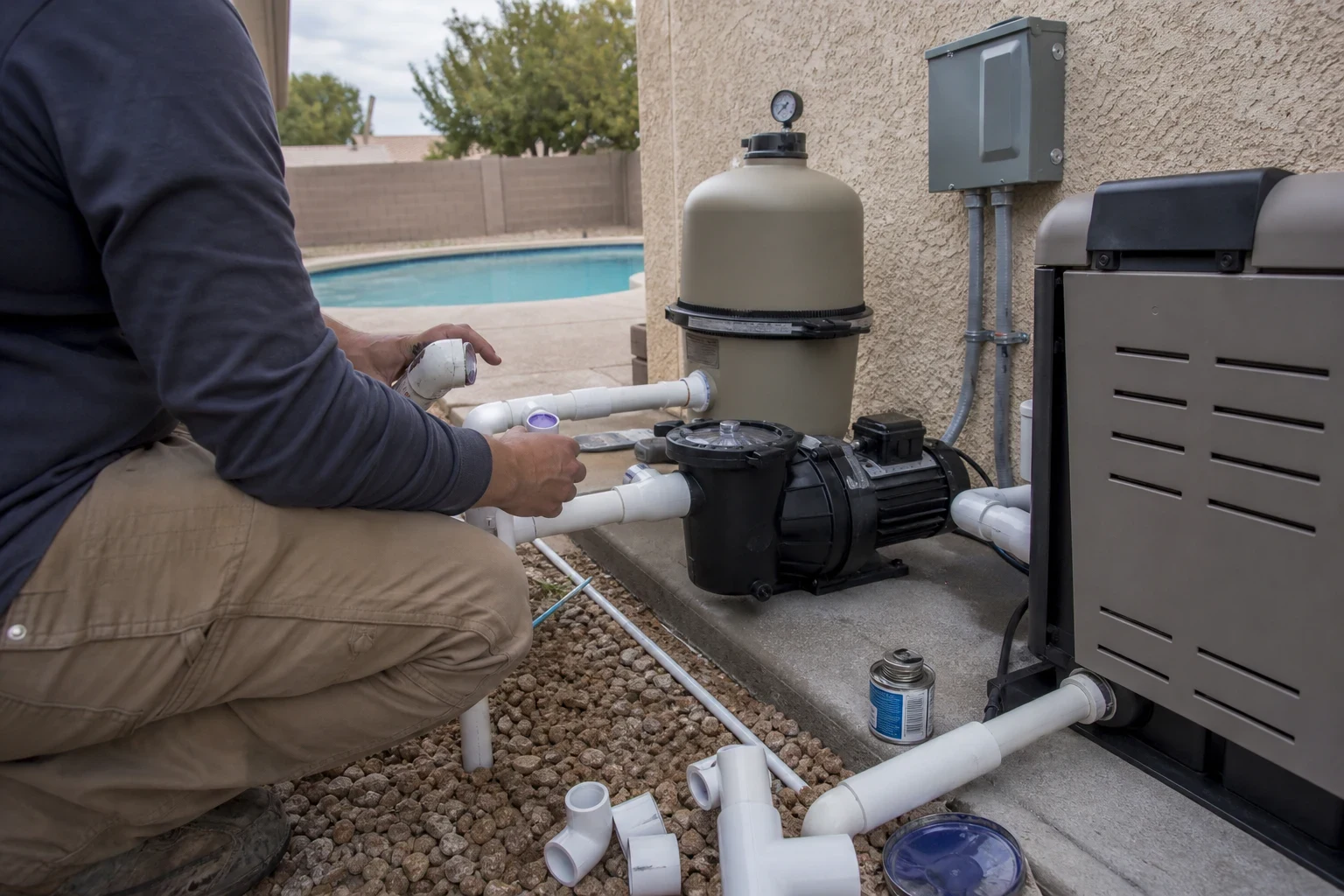
We install pumps, filters, heaters, salt chlorinators and automation for your home pool. Before we recommend anything, we inspect the whole equipment pad and tell you plainly which parts are worn out and which still have years left.
New equipment, sized to the pool you actually have
Equipment installation means replacing or adding a piece of the system that moves, filters, heats or sanitizes your water. Most of our installs start with a failing pump motor, a cracked filter tank or a heater that no longer fires. Sometimes the right call is a repair instead, and our Pool Repair page covers that work.
A pump that is too large for 1.5-inch plumbing just burns power and pushes water too fast through the filter. A filter that is too small for the pump clogs quickly and runs at high pressure. So we measure pipe size, count returns and check the pool's volume before we pick a model. Under a long desert summer, the right size matters more than the brand.
We are ROC licensed, and every installation is done by our own technicians. We do not hand the job to a subcontractor.
What an installation covers
- Variable-speed pumps
- We replace single-speed and failing pumps with variable-speed models, which current federal efficiency rules require for most replacement filter pumps. We set the run speeds and schedule so the pool turns over fully without running the motor at high RPM all day.
- Cartridge, sand and DE filters
- We match filter area to pump flow and replace cracked tanks, broken multiport valves and worn lid O-rings. If you are switching filter types, we explain how the cleaning routine changes before you commit.
- Heaters and heat pumps
- Gas heaters and electric heat pumps need correct clearances, water flow and supply lines. We check that your existing gas or electrical service can carry the new unit before we quote it.
- Salt chlorinators and cells
- We install salt systems and replacement cells, then set output to your pool's volume. Hard water scales salt cells fast, so we show you how to check and clean the plates.
- Plumbing and valves at the pad
- New equipment usually needs fresh PVC runs, unions and check valves. We glue with primer and cement rated for pressure pipe, add unions so future swaps are simpler, and pressure-test before we leave.
- Automation and timers
- We can add a control system or a simple timer so the pump, heater and lights run on a schedule you set.
Signs a piece of equipment needs replacing
Pump motor screams or trips
A grinding or high whine usually means worn motor bearings. A motor that trips the breaker or hums without spinning may have a failed capacitor or windings.
Cracks or weeping at the filter
UV and heat break down plastic tanks over time. A hairline crack on a pressurized tank can split under load, so we treat it as a replacement, not a patch.
Heater won't hold temperature
Scale-clogged heat exchangers, failed igniters and corroded burners all show up as weak or no heat. We test to find which one before saying the heater is done.
Constant repairs on old equipment
When a 15-year-old pump needs a third seal and a new motor, replacing the whole unit often costs less over the next few years. We lay out both options and the numbers behind them.
High power bills from the pump
An old single-speed pump running eight hours a day is often the largest electric load at your home in summer.
What moves the cost of an installation
The equipment itself is only part of the price. Labor depends on how much plumbing and electrical work the new unit needs to fit and run correctly. We quote after the inspection, so the number reflects your pad and not a guess.
Type and size of equipment
A heat pump costs more than a cartridge filter, and larger pools need higher-capacity units. We size to what the pool needs, not the biggest model on the shelf.
Plumbing changes
Different port sizes or layouts between the old and new unit mean new PVC, fittings and valves. Upsizing undersized pipe adds more.
Electrical and gas supply
A heater or heat pump may need a larger circuit or a gas line that can handle the load. We check this up front.
Condition of the pad
Corroded unions, brittle pipe or a sunken pad can need attention before new equipment goes on, and we show you what we found.
How an installation day runs
- 1
Inspect the whole pad
We look at the pump, filter, heater, valves, plumbing and the electrical connection, not just the part that failed. You get plain findings on what is worn, what is fine and why.
- 2
Recommend and quote
We size the equipment to your pipes and pool volume and give you a line-item quote. If a repair makes more sense than a replacement, we say so.
- 3
Remove and install
We shut off power at the breaker, isolate the equipment, cut out the old unit and plumb in the new one. Bonding wires are reconnected to the new equipment.
- 4
Start up and test
We prime the pump, bleed the air from the filter, check for leaks at every joint and confirm pressure and flow. Then we program speeds or schedules with you.
- 5
Clean up and haul off
Old equipment, pipe scraps and packaging leave with us. You get a short walkthrough of the new controls.
Equipment installation questions
Should I repair my pump or replace it?
It depends on the age of the motor, what failed and the cost of parts. A shaft seal or capacitor on a newer pump is usually worth repairing. A worn-out older single-speed motor often is not. We inspect it and show you both options.
Will a variable-speed pump actually lower my power bill?
In most cases, yes. Running a pump at lower speed for longer uses far less energy than running at full speed for fewer hours, because power draw falls sharply as speed drops. The savings depend on how we set the schedule, which we do at start-up.
Do you install equipment you didn't sell?
We can, if it is the right size and in new condition. We check the model against your plumbing and pool volume first, and we tell you if it is a poor match.
Who does the work?
Our own technicians handle every installation from start to finish. The same crew that inspects your pad does the plumbing, the connections and the start-up, and no part of the job goes to a subcontractor.
How long will my pool be offline?
Most single-component swaps take part of one day, and the pool is running again before we leave. Bigger jobs with new plumbing or a heater take longer, and we tell you the expected timing in the quote.
Find out what your equipment pad really needs
We will inspect your pump, filter and heater and explain what is worn and what is not. Then you get a clear quote for the work that makes sense.