ServicesCalcium Removal and Tile Cleaning
Calcium Removal and Tile Cleaning in Florence
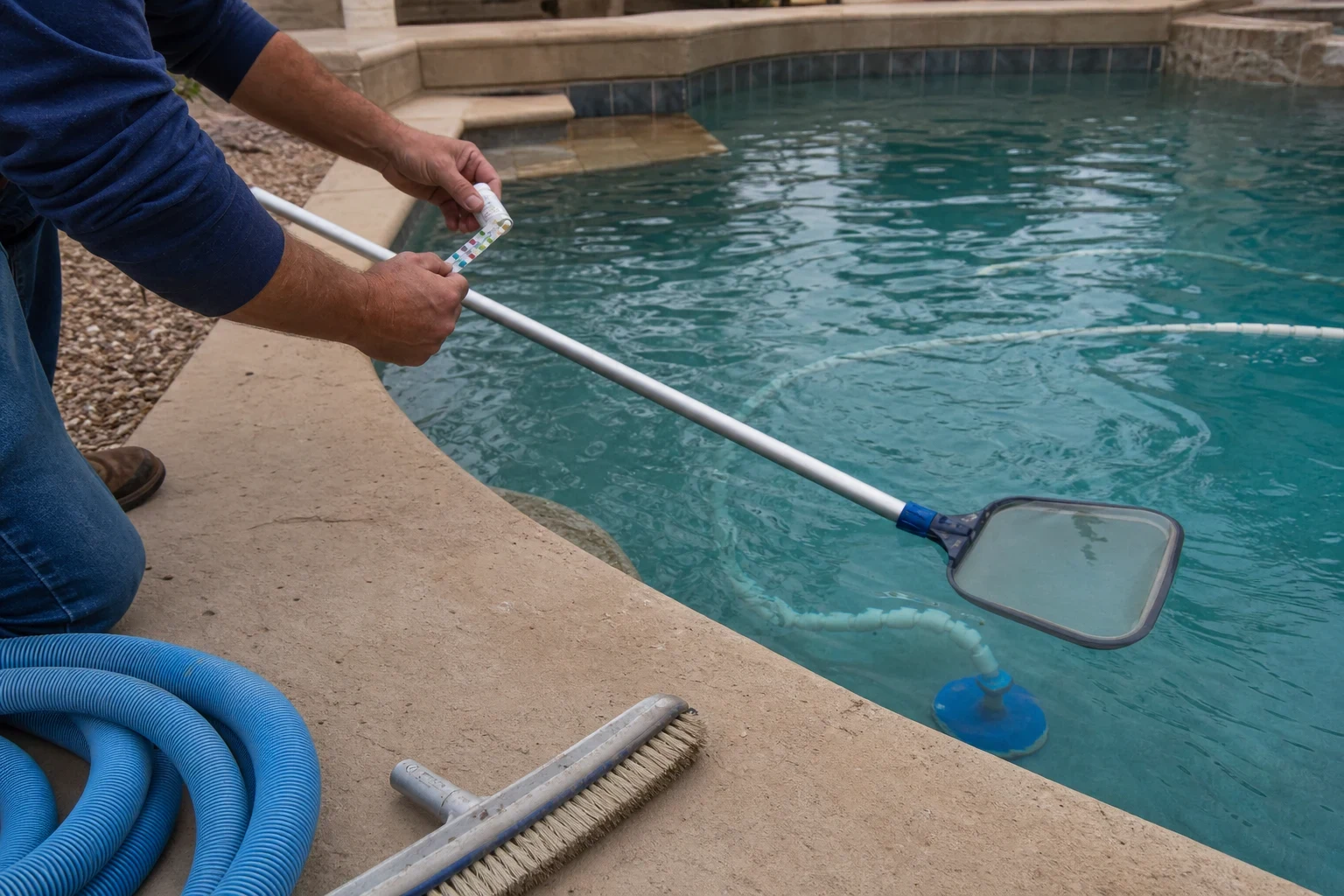
We remove the white and gray scale that builds up along your pool's tile line, then clean the tile and grout without scratching the glaze. Before we quote, we test the deposit to see whether it is calcium carbonate or harder calcium silicate, because that decides the method.
What That White Line on Your Tile Actually Is
Every day your pool loses water to evaporation, and the minerals in that water stay behind. Calcium settles at the waterline, where the tile is wet and dry in cycles, and it hardens into a crust. In our dry heat a pool can lose a lot of water in a summer week, and each top-off adds more dissolved calcium to the pool.
Not all scale is the same. Calcium carbonate is white, somewhat flaky and fizzes when a drop of acid touches it. Calcium silicate is grayer, glassy and much harder, and it barely reacts to acid at all. Scrubbing or acid alone will not move silicate, and the wrong abrasive on carbonate can dull good tile. So we look first, test a spot and tell you what we found before recommending anything.
If your water chemistry is what keeps feeding the scale, we will say so and explain how to slow it down, whether that is better balance through Weekly Pool Cleaning or lowering calcium hardness with a Pool Drain and Refill.
What the Work Includes
- Scale test and tile check
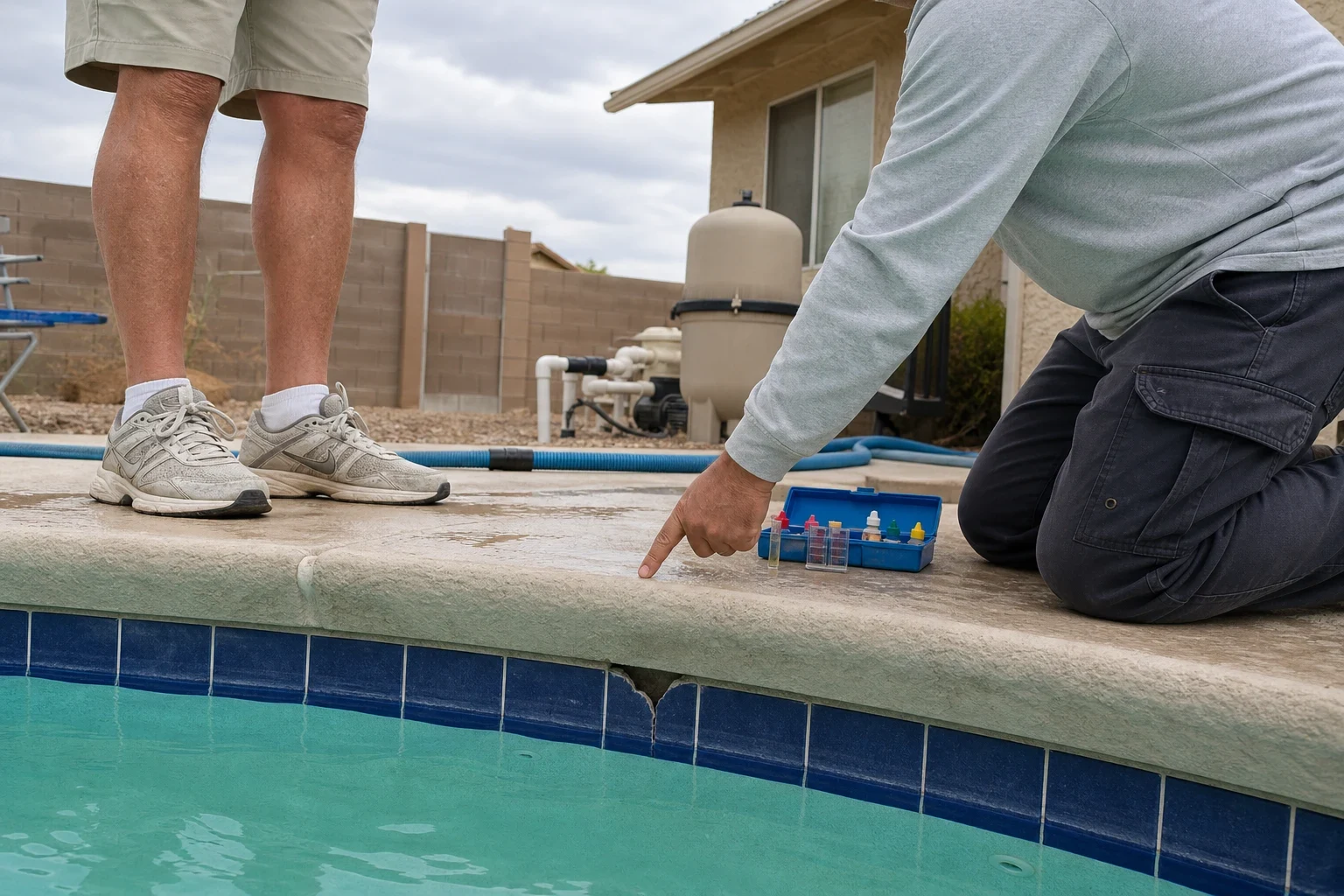
- We test the deposit with a drop of acid to tell carbonate from silicate and note how thick it runs. We also look for cracked tiles, loose pieces and missing grout, since blasting near a loose tile can pop it off.
- Media blasting for heavy scale
- For thick or silicate scale we use pressure blasting with a media matched to your tile. Fine glass bead cuts hard deposits on porcelain and stone; softer media is used on glass tile and lighter carbonate so the surface is not etched.
- Hand detailing
- Corners, step edges, skimmer throats and return fittings get hand work with scrapers and nonmetallic pads where a blaster cannot reach cleanly.
- Grout cleaning
- Scale and dark staining collect in grout joints first. We clean them out and point out any joints that have eroded so you know their condition.
- Protection and cleanup
- We cover the equipment pad, nearby decking and plants before blasting, then rinse spent media off the deck and out of the pool.
- Water chemistry advice
- We test calcium hardness, pH and alkalinity afterward and explain what balance will slow new buildup on your tile.
Signs Your Tile Needs Scale Removal
A white or gray band at the waterline
A crusty line that does not wipe off with a brush is mineral scale, not dirt.
Rough texture under your hand
Run a hand along the tile. If it feels like sandpaper, the deposit has hardened onto the glaze and will keep thickening with every top-off.
Scale that returned after scrubbing
If a pumice stone or tile cleaner only lightens it, you are likely dealing with silicate or a thick carbonate layer that needs a different method.
Crust on water features and spillways
Waterfalls, sheer descents and spa spillovers evaporate water fast and often scale up before the main tile line does.
Dark, stained grout lines
Discolored or crumbling grout at the waterline often sits under or beside scale and should be looked at while the tile is cleaned.
What Moves the Price
Your quote is built from what we see during the inspection, not a flat number guessed over the phone. We explain each part of it so you know why the work is priced the way it is.
Length of tile line
A pool with a long perimeter, a spa and raised walls has more linear feet of tile to clean than a simple rectangle.
Type and thickness of scale
Thin carbonate comes off quickly. Thick or silicate scale takes more blasting time and more media.
Tile material
Glass and glossy glazed tile need softer media and slower work than textured porcelain or stone.
Water features and access
Rock waterfalls, spillways and tight spots against walls or fences add hand detailing time.
Tile and grout condition
Loose tiles or eroded grout found during inspection are noted separately, so you can decide whether to repair them now.
How the Job Runs on the Day
- 1
Inspect and test
We walk the full tile line, test the scale and check for loose or cracked tile. You hear what we found and which method we plan to use before work starts.
- 2
Lower the water
We pump the water a few inches below the bottom of the tile so the full band of scale is exposed and dry enough to work.
- 3
Protect and clean
With equipment and landscaping covered, we blast or hand clean the tile section by section, checking the glaze as we go so we stop at clean tile rather than past it.
- 4
Rinse and refill
We rinse media off the deck and tile, vacuum what lands in the pool and refill to normal level. Your filter may need a backwash or a Filter Cleaning afterward if a lot of fine media went in.
- 5
Rebalance and report
We test the water after refill and tell you what to adjust, so the new water is not scaling the clean tile right away.
Calcium Removal and Tile Cleaning Questions
Will blasting scratch my tile?
Not when the media matches the tile. We choose a softer media for glass and high-gloss glaze and a firmer one for porcelain and stone, and we test a small area first. If we see any dulling, we change the method before going further.
Do you have to drain the pool?
No. We only lower the water a few inches below the tile line, then refill it the same day. A full drain only makes sense if your calcium hardness is so high that the water itself needs replacing, and we would tell you that from the test results.
How long until the scale comes back?
That depends on your water. With calcium hardness, pH and alkalinity kept in range, buildup slows a lot. If those numbers run high and the pool is topped off with hard fill water, new scale can start within a season, which is why we test and explain the balance after every cleaning.
What if you find loose or cracked tiles?
We show you before we touch them, because blasting can knock a loose tile free. We are ROC licensed, and all repairs are completed in-house, not subcontracted, so resetting tile or regrouting can be quoted and handled by our own crew.
Is this the same as an acid wash?
No. Tile cleaning works only on the waterline tile and grout with the water mostly in the pool. An acid wash treats stained plaster across the whole interior and requires a full drain. Our Acid Washes page explains when that is the better call.
Find Out What Kind of Scale You Have
We will look at your tile line, test the deposit and tell you plainly which method fits and what it will take. The quote costs you nothing.