ServicesGreen to Clean Recovery
Green to Clean Pool Recovery in Florence, AZ
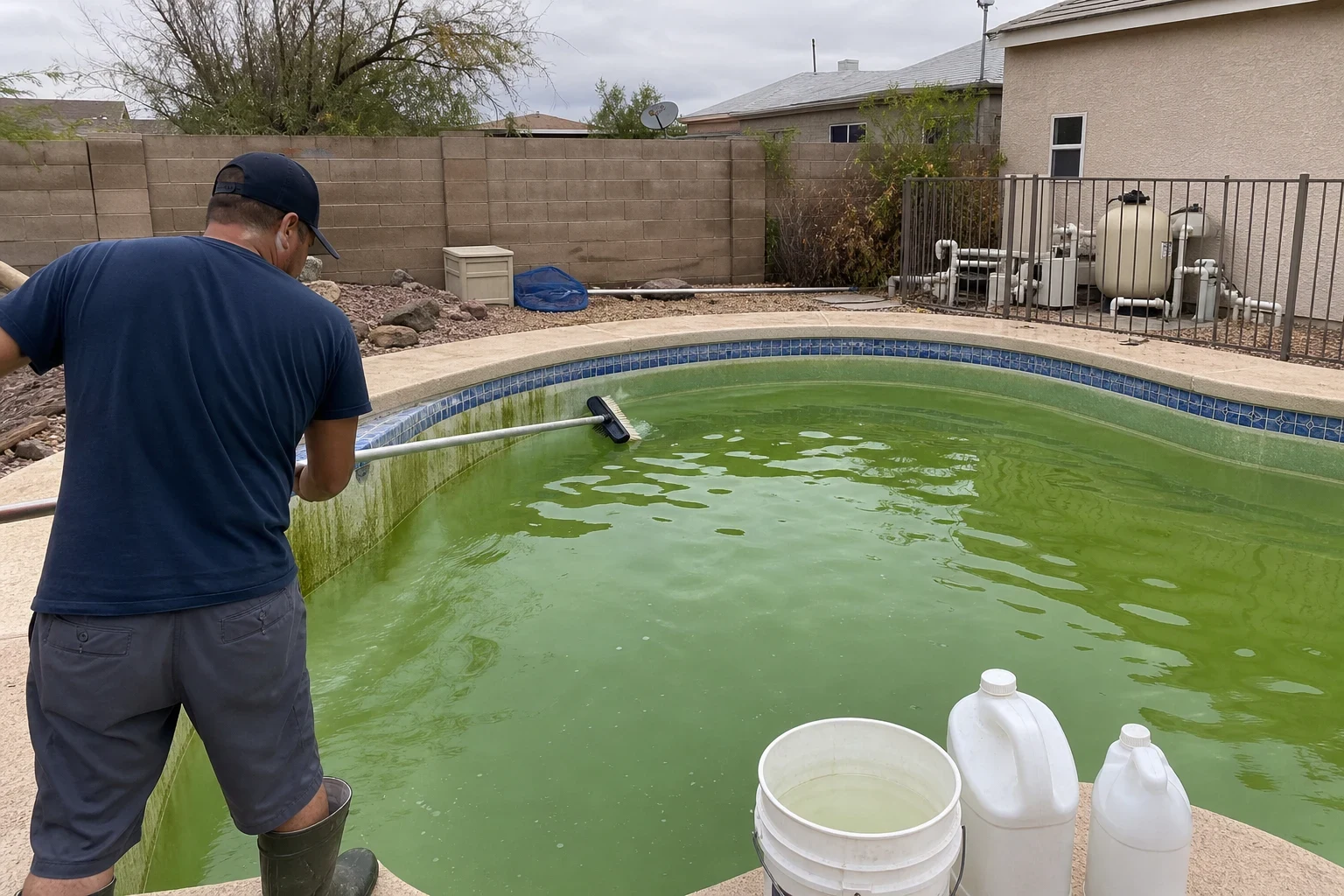
A green pool means something stopped working: chlorine, circulation or filtration. We test the water and check the equipment first, tell you plainly what caused it, then kill the algae, filter it out and balance the water so you can swim again.
What a green to clean recovery actually fixes
Algae blooms when free chlorine drops too low to keep up. In a desert summer, with water temperatures climbing into the 90s, that can happen in a few days if a pump timer fails or a filter clogs. The green you see is living algae, and the cloudiness that follows is dead algae your filter has to catch.
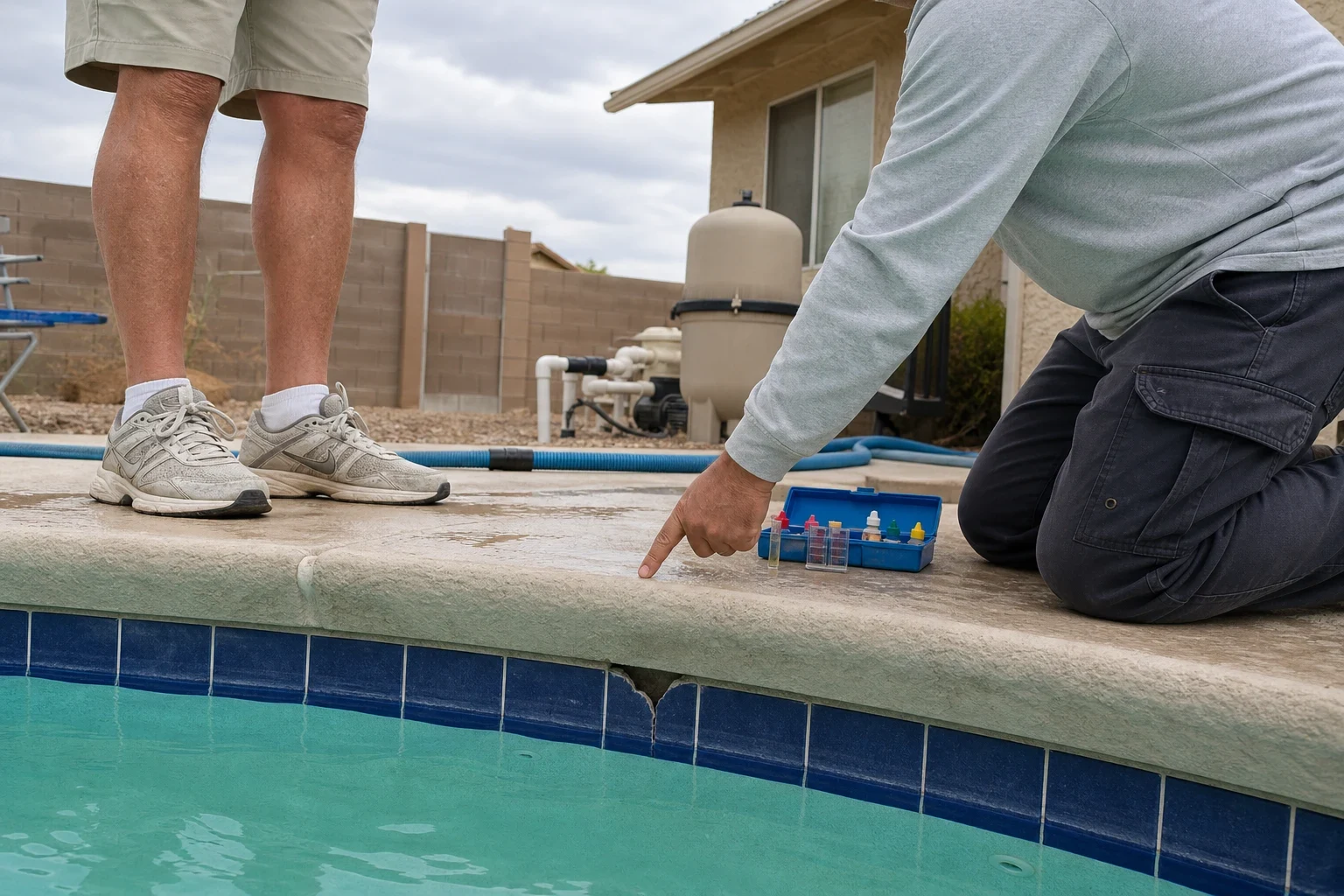
Shocking a pool without knowing why it turned is how people end up buying chemicals for weeks. High cyanuric acid, the stabilizer in chlorine tablets, slows chlorine down so much that normal doses stop working. A worn pump seal or a cartridge packed with debris will let algae return no matter how much chlorine goes in. So we start with a full water test and a look at the pump, filter, skimmer and returns, and you hear what we found before any treatment begins.
What the recovery includes
- Full water test
- We measure free and combined chlorine, pH, total alkalinity, cyanuric acid, calcium hardness and phosphates. The cyanuric acid reading tells us how much chlorine it will take to get ahead of the algae.
- Equipment check
- We confirm the pump primes and moves water, read the filter pressure gauge, and look at the skimmer and pump baskets, the timer and the return jets. A pool cannot clear if the water is not turning over.
- Shock and brushing
- We raise chlorine to the level the stabilizer reading calls for and hold it there. Walls, steps and floor get brushed hard so algae lifts off the plaster and the chlorine can reach it.
- Filter cleaning during the recovery
- Dead algae loads a filter fast. We break down and clean cartridge, DE or sand filters as the pressure climbs, which is often more than once before the water turns blue.
- Debris removal and vacuuming
- Leaves and settled algae come out with nets and the vacuum, sent to waste when the load is too heavy for the filter.
- Final balance
- Once chlorine holds overnight and the water is clear, we set pH, alkalinity and calcium so the plaster and equipment are protected.
Signs your pool needs a recovery, not a quick shock
You cannot see the main drain
If the deep end floor has disappeared, the algae load is past what a single dose of shock will handle.
Chlorine disappears overnight
You add chlorine and test zero the next morning. Algae is consuming it, or the stabilizer level is too high for it to work.
Slippery walls and steps
A slick film on the plaster is algae taking hold even before the water looks green.
Green or yellow returns after a dust storm
Monsoon dust carries spores and phosphates into the water, and a bloom often follows within days.
Dark spots that will not brush off
Black algae roots into plaster and needs aggressive brushing and higher chlorine over several visits.
How a recovery runs, step by step
- 1
Test and inspect
We test the water at the pool and check the pump, filter, timer and baskets. You get a plain explanation of what caused the bloom and what it will take to clear it.
- 2
Fix what is blocking circulation
Clogged baskets get emptied and the pump is set to run long enough. If a part has failed, we tell you before doing anything else.
- 3
Treat and brush
Chlorine goes in at the level your stabilizer reading requires, and every surface gets brushed. The pump runs continuously so treated water keeps moving through the filter.
- 4
Return visits until it holds
We come back to brush, retest and clean the filter. Most pools take several days, depending on how far gone the water was and what the tests showed.
- 5
Balance and hand off
When the water is clear and chlorine holds overnight, we balance it and talk through what will keep it that way.
What moves the cost of a recovery
We give you the quote after the water test and equipment check, because those two things decide most of the work. A lightly hazy pool and a swamp with leaves on the bottom are different jobs. Here is what makes the difference.
- How green the water is
- Light green clears with fewer visits and less chlorine. Dark water with a hidden floor needs more chemicals, more brushing and more filter cleanings.
- Pool size
- Chlorine is dosed by gallons, so a larger pool takes more product to reach and hold the right level.
- Cyanuric acid level
- Very high stabilizer means much more chlorine to get ahead of the algae. Past a certain point, a partial drain is cheaper than fighting it, and we will say so.
- Equipment condition
- A pump that will not prime or a torn cartridge has to be dealt with first, or the recovery will not hold.
- Debris load
- Heavy leaves and silt on the floor add vacuum-to-waste time and extra water to top off afterward.
Green pool recovery questions
Something not covered here? (520) 645-8108
How long until my pool is swimmable?
It depends on how much algae there is and what the water test shows. A light bloom can clear in a couple of days. A dark pool with high stabilizer or a struggling filter takes longer, and we will give you a realistic estimate after the first visit.
Wouldn't it be faster to just drain it?
Sometimes, but not usually. Draining in summer heat can stress plaster, and refilling uses a lot of water. If your cyanuric acid or calcium is so high that treatment will not work, we will recommend our pool drain and refill service and explain why.
Why did my pool turn green in the first place?
The common causes are low chlorine, a pump not running long enough, a clogged filter, or stabilizer built up from chlorine tablets. Our inspection finds which one it was, so you are not just treating the symptom.
What if the pump or filter is the problem?
We are ROC licensed, and all repairs are completed in-house, not subcontracted. If the inspection finds a failed part, we explain the repair and quote it before we start, so the recovery and the fix happen together.
How do I keep it from coming back?
Steady chlorine, enough run time and a clean filter. Our weekly pool cleaning covers all three, and chemicals are included in the monthly price. New customers get a free first month of weekly service, with no contract and the freedom to cancel whenever you choose.
Will dark spots on the plaster go away?
Black algae usually clears with repeated brushing and high chlorine. Stains left behind on older plaster may need an acid wash, which we can look at once the water is clear.
Find out why your pool turned green
We serve Florence and nearby towns like San Tan Valley and Coolidge. We test the water, check your equipment and tell you what it will take before anything else happens.